Flat Battery Car Help: What to Do (and What Not to Do)
A flat battery is one of the most common reasons a car won’t start — especially after short trips, cold mornings, or if the car has been sitting for a while. Here’s a simple, safe guide to get you going and reduce the chances of it happening again.
Quick takeaway: If the engine won’t crank (or you only hear clicking), it’s likely battery-related. Don’t keep turning the key — it usually makes it worse. Focus on safety first, then try a proper jump start or get help.
Signs your battery is flat (or dying)
A flat battery often gives you little warnings before it fully gives up. Here are the common signs:
- Slow crank or the engine struggles to turn over
- Rapid clicking when you try to start
- Dim dashboard lights or flickering headlights
- Electrics acting weak(windows, radio, central locking)
- Started fine yesterday but dead today (often from lights left on or short trips)
Safety first: what to do before you try anything
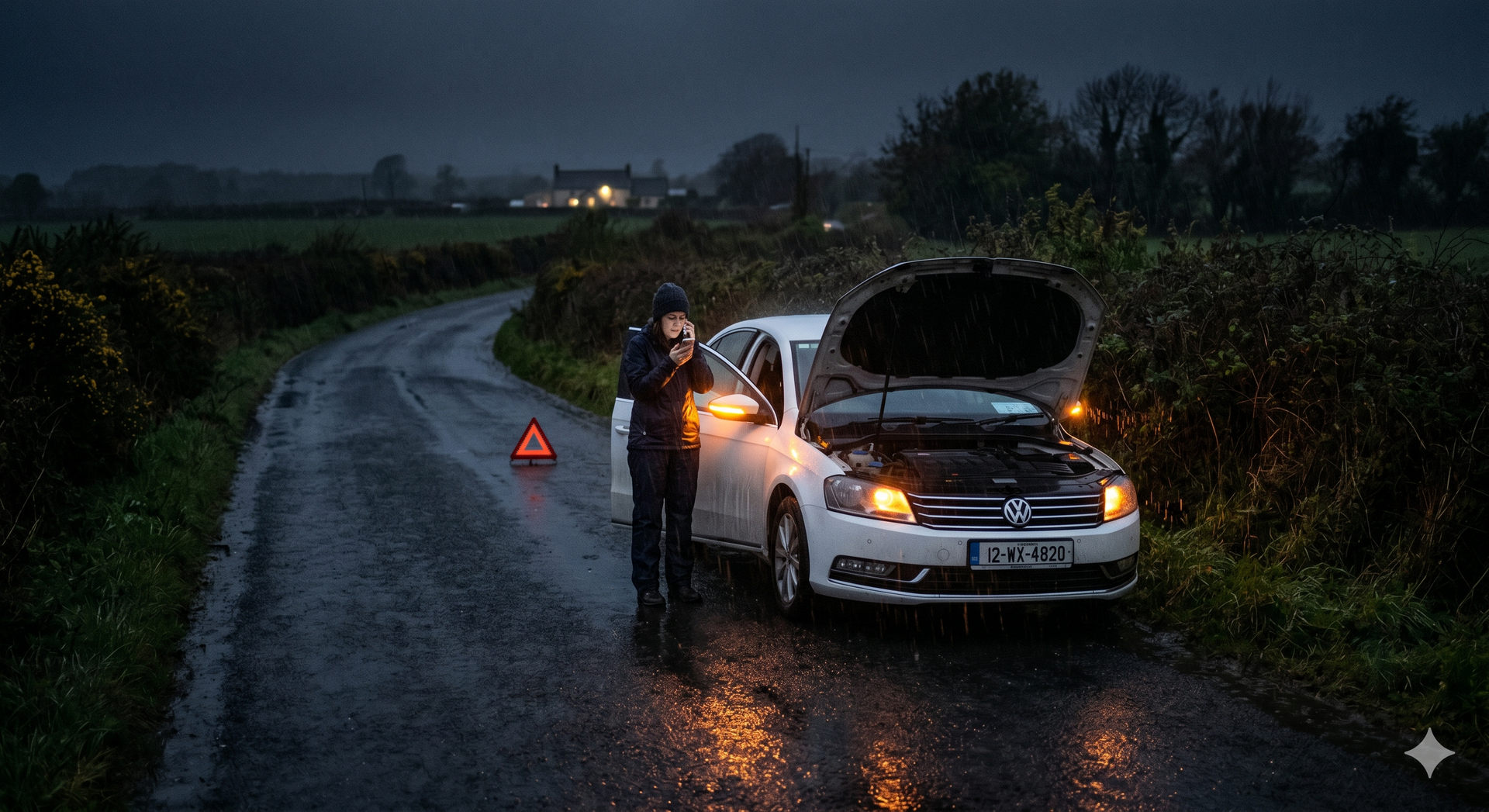
If you’re stuck with a flat battery, the car isn’t moving — which means your location matters. Prioritise safety before opening the bonnet.
- Hazards on immediately, especially on narrow roads
- Don’t stand in live traffic or on a dangerous shoulder
- Use hi-vis if you have it, and keep passengers safe
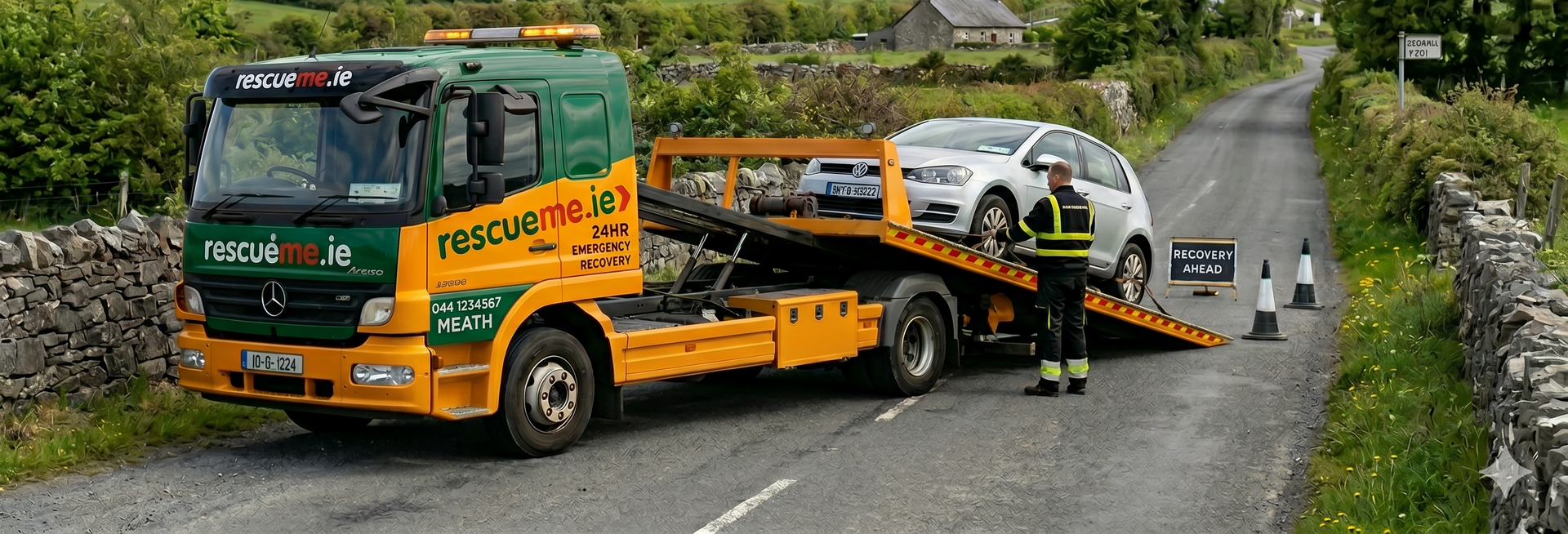
- If you’re in a risky spot, get help rather than “having a go”
Quick 60-second checks that sometimes solve it
1) Something left on?
Headlights, interior lights, boot light, chargers, or a door not fully closed can flatten a battery overnight.
2) Battery terminals loose?
If the clamps are loose, the battery might be fine but not connected properly. If you can move them by hand, that’s a red flag.
3) Corrosion on terminals?
White/green powdery build-up can reduce contact and cause starting problems. If it looks bad, it may need cleaning by someone who knows what they’re doing.
4) Try a proper reset
Turn everything off (radio, lights, heating), wait 30 seconds, then try one clean start attempt.
Jump starting: the safe, simple method
Jump starting works in many cases, but the connection order matters. If you’re not confident, it’s safer to call for help.
Do NOT jump start if: the battery is leaking, swollen, smoking, smells strongly (like rotten eggs), or there’s visible damage. Step back and get help.
Jump leads order (clear and safe)
- Park close (not touching), handbrakes on, both cars switched off.
- Connect red to + on the dead battery.
- Connect the other end of the red to + on the donor battery.
- Connect black to - on the donor battery.
- Connect the other end of the black to a solid metal earth point on the dead car (a clean bolt/metal point away from the battery if possible).
- Start the donor car, wait 60 seconds, then try starting the dead car.
Once it starts
- Let it run or drive (if safe) for 20–30 minutes to build charge.
- Turn off big drains (heated seats, rear demister) for a while.
- Disconnect the leads in reverse order of how you connected them.
Common mistakes that make a flat battery worse
“I’ll just keep trying it.”
Repeated cranking can drain what little charge is left and make a jump harder.
“I’ll squeeze the clamps on anywhere.”
A poor connection can cause sparks and won’t deliver power properly. If the clamps aren’t solid, stop and reset them.
“I’ll overtake the problem.”
If your battery is repeatedly going flat, there’s usually an underlying cause (battery age, short trips, drain, or charging issues).
Why it keeps happening (and how to prevent it)
If your battery goes flat more than once in a short period, here are the usual suspects:
- Short trips: the car never runs long enough to recharge properly
- Battery age: older batteries struggle in cold weather and after repeated starts
- Parasitic drain: something draws power while the car is off (lights, accessories, wiring, dashcam)
- Charging issue: alternator problems can leave the battery undercharged
Simple prevention tip: If you’re doing lots of short trips, try a longer drive occasionally. And if you’re not using the car for weeks, consider a battery maintainer/charger.
A quick checklist for flat battery situations
- Make it safe: hazards on, don’t stand in traffic, take your time.
- One clean start attempt: not ten panicked ones.
- Check the obvious: lights left on, loose terminals, corrosion.
- Jump start properly: correct order, solid connections, no rushing.
- If it keeps happening: treat it as a warning sign, not bad luck.
Final word
A flat battery is frustrating — but it’s also very fixable. The main thing is to stay safe, don’t rush the jump start, and take repeat flat batteries seriously so you’re not stuck again next week.