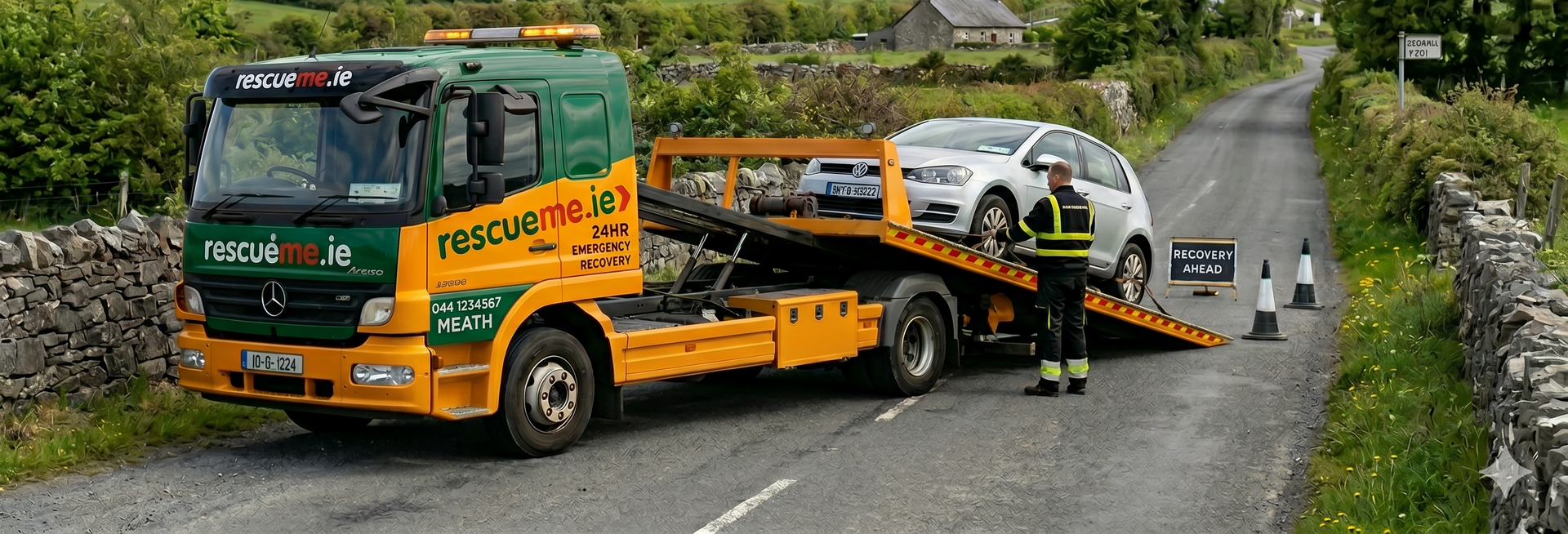
Flat Tyre Roadside Help: What to Do (and What Not to Do)
A flat tyre can happen anywhere — outside your house, in a car park, or on a narrow Irish back road. The goal is simple: stay safe, avoid making the problem worse, and get back moving as quickly as possible. Here’s a clear step-by-step guide for roadside situations.
Quick takeaway: If you’re in a dangerous spot (hard shoulder, blind bend, narrow road), don’t attempt a tyre change. Get somewhere safe first — or call for help. A tyre isn’t worth risking your life for.
Signs you’ve got a flat tyre (or a slow puncture)
Some flats are instant, others creep up slowly. Common signs include:
- Thumping/dragging feeling or a sudden change in handling
- Steering pulling to one side
- Tyre pressure warning light(TPMS) on the dash
- Visible low tyre or bulging sidewall
- Hissing sound or pressure dropping over hours/days
Safety first: what to do immediately
If you suspect a flat while driving, don’t panic — but don’t keep going either. Driving on a flat can destroy the tyre and damage the wheel.
- Slow down gently — no sharp braking or sudden swerves.
- Put hazards on and look for a safe place to stop.
- Stop on level ground if possible (car park, wide lay-by, safe shoulder).
- Handbrake on, car in gear (manual) / Park (auto), and keep passengers safe.
Step 1: Confirm which tyre is flat
Do a quick walk-around check. Sometimes the tyre looks “ok” but is actually very low. If you have a tyre pressure gauge, use it — otherwise look for obvious sagging or damage.
Important: If the sidewall is torn, the tyre is shredded, or the wheel is sitting low on the rim, don’t attempt to drive further — that’s recovery territory.
Step 2: What kind of “spare” do you have?
A) Full-size spare
Best option. If fitted correctly, you can usually drive normally and get the damaged tyre repaired or replaced.
B) Space saver (“skinny” spare)
Temporary only. Drive carefully and keep your speed down. It’s designed to get you to a tyre shop — not to do your weekly errands.
C) Tyre repair kit (sealant + compressor)
Works for some punctures in the tread area. It usually won’t help for sidewall damage or a shredded tyre. Read the instructions and don’t use it if the tyre is badly damaged.
D) Run-flat tyres
Some cars can drive a limited distance on a run-flat, but you still need to follow the car’s guidance and keep speeds down. If the tyre is shredded or you’re unsure, stop and get help.
If you’re changing the wheel: the safe basics
Only attempt a wheel change if you’re on level ground, away from traffic, and you feel confident. If not — call for assistance. Here are the safe basics:
- Hazards on and make sure you’re stable and safe.
- Handbrake on, in gear/Park, and turn wheels slightly away from traffic if possible.
- Get the spare, jack, and wheel brace ready before lifting anything.
- Loosen wheel nuts slightly while the car is still on the ground (don’t remove them yet).
- Jack at the correct jacking point(check your car manual if unsure).
- Remove nuts, swap wheel, hand-tighten nuts in a star pattern.
- Lower the car and tighten firmly again in a star pattern.
- Check tyre pressure if you can (especially with a space saver).
One common mistake: changing a wheel on soft ground or a slope. If the jack shifts, it can be extremely dangerous. If the ground isn’t solid and level, don’t do it.
What not to do (the tyre-killers)
“I’ll just drive slowly to the next place.”
Driving on a flat can destroy the tyre and damage the wheel. If it’s truly flat, stop as soon as it’s safe.
“I’ll use sealant for anything.”
Sealant kits are for certain punctures — not sidewall tears, blowouts, or shredded tyres.
“I’ll change it here, it’ll be grand.”
If you’re near traffic, on a bend, or on uneven ground, it’s not worth the risk. Recovery is the safer move.
Why flat tyres happen (and how to reduce the chances)
Many punctures aren’t bad luck — they’re predictable. A few habits can reduce the chances:
- Check tyre pressures regularly (underinflation increases puncture risk and wear).
- Avoid kerbing — sidewall damage can lead to sudden failure later.
- Watch for potholes on rural roads (they can pinch and split tyres).
- Replace worn tyres — low tread can make punctures more likely and reduces grip in wet weather.
- Keep a basic kit: hi-vis, torch, gloves, tyre inflator, and a pressure gauge if you have one.
A quick flat tyre roadside checklist
- Slow down and pull in safely(hazards on).
- Confirm the flat and check for sidewall damage.
- Decide your option: spare / sealant kit / run-flat / call for help.
- Only change a wheel if safe(level ground, away from traffic).
- Get the tyre repaired properly — don’t treat a temporary fix as permanent.
Final word
A flat tyre is manageable — but the roadside can be dangerous. If you’re not in a safe place to change it, don’t gamble. Get the right help and get home safely.