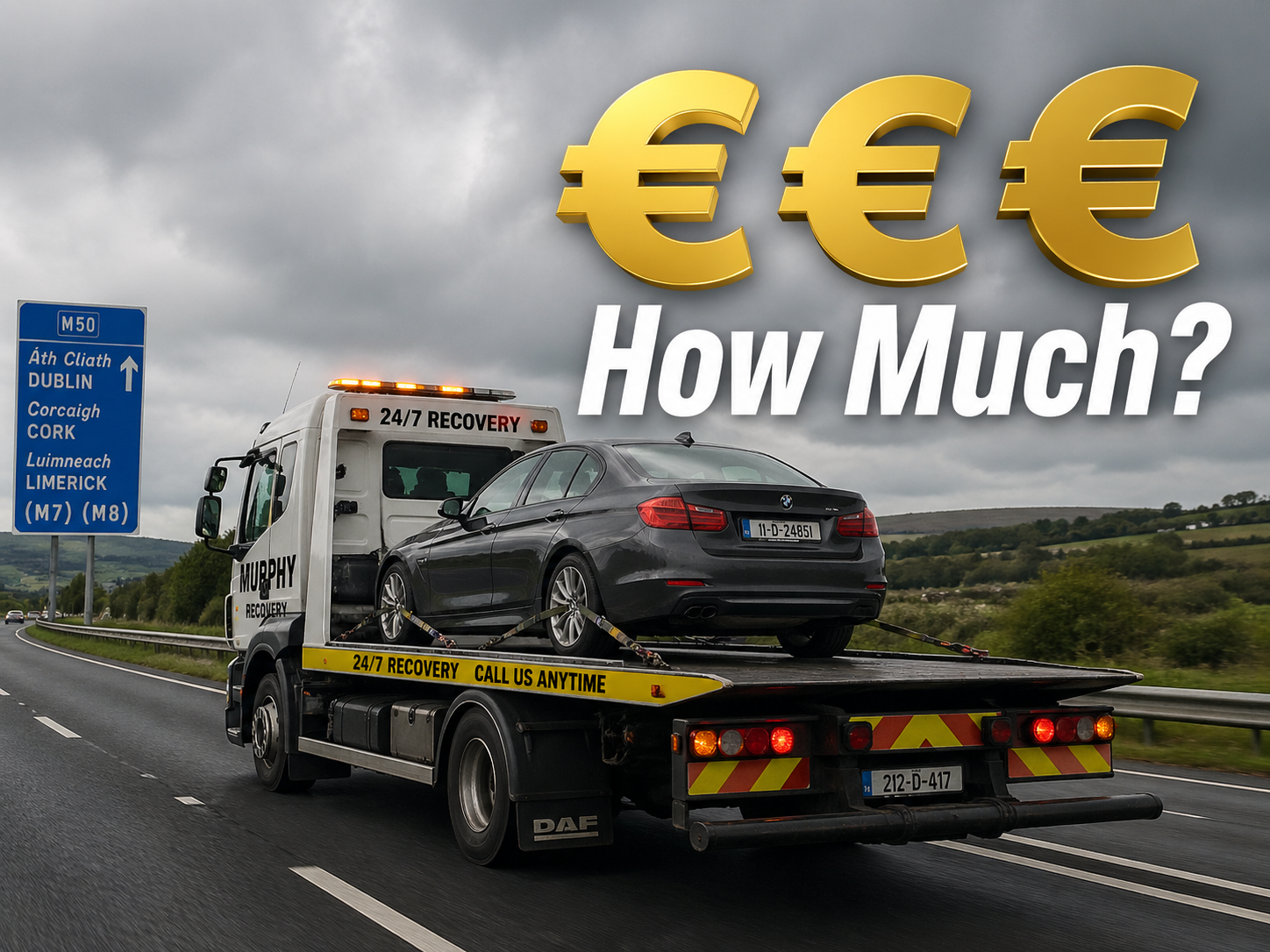
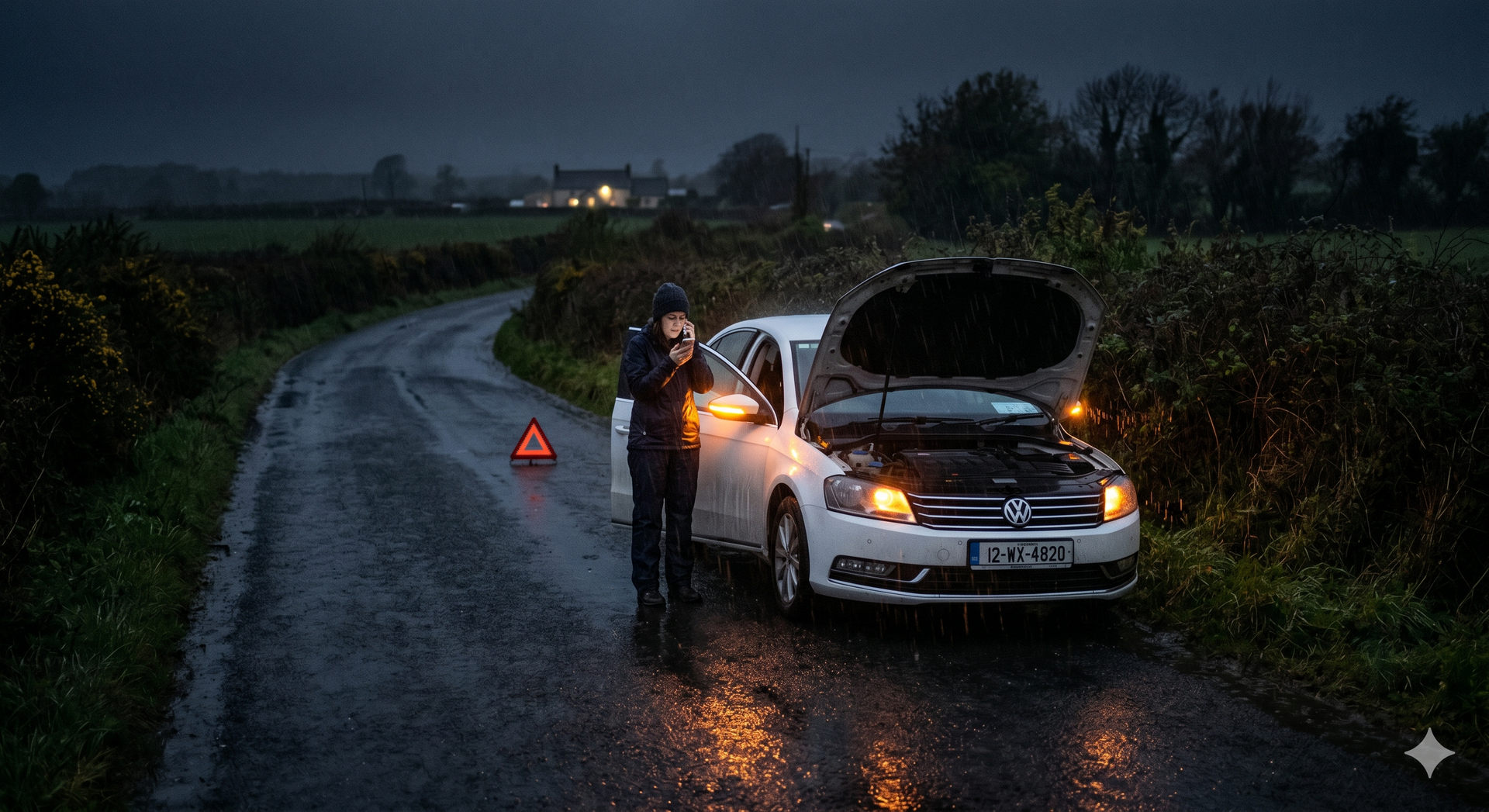
Recovery Wait Times Ireland
How long does breakdown recovery take in Ireland? Wait times depend on your location, the type of problem, provider availability, traffic, weather and whether you need roadside assistance or a full tow truck.
How Long Does Breakdown Recovery Take?
Drivers searching for recovery wait times usually want one thing: a realistic idea of how long they could be sitting at the roadside. There is no single answer, because a breakdown in a busy city is different from a breakdown on a rural road, a motorway shoulder or a remote coastal route.
In general, breakdown recovery in Ireland can be fast when a provider is nearby and the issue is straightforward, but wait times usually increase when call volumes are high, traffic is heavy, weather is poor, or the vehicle needs specialist towing.
Typical Recovery Wait Times in Ireland
These are broad guidance ranges only. Actual breakdown recovery wait times depend on your exact location, road conditions and available providers nearby.
| Situation | Typical Wait Time | Notes |
|---|---|---|
| Urban roadside assistance | Often faster | More providers nearby and shorter travel distances |
| Town or regional road call-out | Moderate | Depends on provider coverage in that area |
| Rural or remote breakdown | Often longer | Travel time to reach you is usually the biggest factor |
| Motorway or high-speed road | Variable | Traffic conditions and safety access can affect arrival time |
| Specialist towing or damaged vehicle | Can be longer | Wrong truck cannot do the job, so correct dispatch matters |
| Bad weather or peak demand | Usually longer | Multiple breakdowns at once increase queue times |
The blunt truth: the biggest driver of wait time is usually not the breakdown itself. It is how close the right provider is to your exact location.
What Affects Breakdown Recovery Wait Times?
Your Location
A city-centre call-out is usually easier to reach than a breakdown on a remote rural road or isolated coastal stretch.
Traffic
Heavy traffic in cities or on main routes can slow the provider even when they are relatively close.
Weather
Rain, ice, storms and poor visibility often increase call volumes and reduce travel speed for recovery vehicles.
Type of Job
A jump start or tyre issue may be quicker to dispatch than accident recovery or a non-rolling vehicle that needs specialist towing.
Peak Demand
Busy times, weather events and commuting hours can trigger multiple breakdowns at the same time.
Bad Location Details
If the provider cannot find you quickly, your wait time gets longer immediately. Poor location info wastes time.
How To Reduce Your Recovery Wait Time
You cannot control traffic or provider demand, but you can absolutely reduce delays by giving better information from the start.
- Share a pin drop or Eircode instead of vague directions.
- Say the road number and direction such as N25 towards Cork or N24 towards Tipperary.
- Describe the vehicle properly including make, model, manual or automatic, and whether it is AWD or 4x4.
- Explain what actually happened such as flat tyre, dead battery, overheating, accident damage or warning lights.
- Say if the car can roll or steer because that affects the truck and equipment needed.
- Mention access issues such as underground parking, barriers, tight entrances or low height restrictions.
The fastest way to slow down your own recovery is giving bad directions. The fastest way to improve your response is making it easy for the provider to find you and bring the right truck first time.
Roadside Assistance vs Tow Truck: Which Is Faster?
Many drivers assume a tow truck is always the answer. It is not. If the issue is a flat battery, puncture, or minor roadside problem, roadside assistance may solve it faster than arranging a full vehicle recovery.
Roadside Assistance
Usually better for flat batteries, tyre issues, fuel problems and small roadside fixes. Start here if the vehicle may not need towing.
Tow Truck / Recovery
Usually needed for accident damage, non-starting vehicles with bigger faults, overheating that returns, major leaks, steering issues or broken suspension.
Start with Roadside Assistance Ireland if the issue may be fixable where you are. If it clearly needs lifting and moving, go to Tow Truck Near Me.
Wait Times Can Vary By County
Response times can feel different from one county to the next because provider density, road type and travel distances change. A breakdown in a city or large town may be faster to reach than a breakdown well outside the nearest centre.
What To Do While Waiting For Recovery
- Turn on hazard lights immediately.
- Move to a safer position if it is safe to do so.
- Keep passengers away from live traffic.
- Have your phone on and watch for callbacks.
- Be ready to confirm your exact location again if needed.
- Do not attempt risky roadside repairs on fast or exposed roads.
If you are asking yourself what to do while you wait, you are already thinking correctly. Safety matters more than shaving a few minutes off the clock.
Frequently Asked Questions
How long does breakdown recovery usually take in Ireland?
It depends on your location, traffic, weather, demand and the type of recovery needed. Urban areas are often faster than remote rural locations.
Why are recovery wait times sometimes longer than expected?
The biggest causes are distance to your location, multiple call-outs at once, poor weather, traffic, and needing a specific type of recovery truck.
Can I get help faster if I share better location details?
Yes. A pin drop, Eircode, road number and landmark can make a major difference to how quickly the right provider finds you.
Is roadside assistance faster than towing?
Sometimes. Flat batteries, punctures and fuel issues can often be handled faster by roadside help than by arranging a full tow truck.
Need Help Now?
Recovery wait times will always depend on real-world conditions. The best move is to make yourself easy to find and get connected to the right local provider fast.