Rescue Me
Driving Safely in Wet and Windy Weather in Ireland
Driving in Ireland often means dealing with unpredictable weather. One minute it’s dry, the next you’re in heavy rain with strong gusts of wind coming off the Atlantic. Wet and windy conditions are especially common in autumn and winter, but they can catch drivers out at any time of year. Knowing how to adapt your driving can make a huge difference to your safety — and everyone else’s.
Slow Down and Increase Your Distance
Rain dramatically reduces tyre grip and increases stopping distances. Even light rain can make roads slippery, especially after a dry spell when oil and dirt rise to the surface. In wet conditions, slow down and leave plenty of space between you and the vehicle in front. A good rule of thumb is to double your normal following distance.
Watch Out for Standing Water
Surface water and flooding are common on Irish roads, particularly on rural routes and poorly drained stretches. Driving through standing water at speed can cause aquaplaning, where your tyres lose contact with the road entirely. If you see water ahead, ease off the accelerator, avoid harsh braking, and drive through slowly in a low gear. If the water looks deep, don’t risk it — find an alternative route.
Be Extra Careful in Strong Winds
High winds are one of the most underestimated dangers on Irish roads. Sudden gusts can push your vehicle sideways, especially on exposed roads, bridges, and coastal routes. This is particularly dangerous for high-sided vehicles, vans, motorbikes, and cars towing trailers.
Keep both hands firmly on the steering wheel and be prepared for sudden changes in wind strength, especially when overtaking large vehicles or exiting sheltered areas like underpasses or tree-lined roads.
Use Lights Correctly
In heavy rain or poor visibility, dipped headlights help you see and be seen. Avoid using full beams in fog or heavy rain, as they can reflect back and reduce visibility. Make sure your lights are clean and working properly — something as simple as a blown bulb can make you nearly invisible in bad weather.
Check Your Tyres and Wipers
Good tyres are essential in wet conditions. Make sure your tyre tread depth is legal and ideally well above the minimum. Worn tyres struggle to disperse water and increase the risk of aquaplaning. Windscreen wipers should clear the screen effectively without smearing — if they don’t, replace them before the weather turns worse.
Brake and Steer Smoothly
Sudden braking, sharp steering, or quick acceleration can easily cause a loss of control on wet roads. Try to drive smoothly and predictably. Brake earlier than usual, steer gently, and anticipate hazards well in advance.
Stay Alert for Fallen Debris
Strong winds can bring down branches, signs, and other debris onto the road, especially after storms. Keep an eye out around bends and on rural roads where obstacles may not be visible until the last moment.
Know When Not to Drive
Sometimes the safest option is simply not to drive. During severe weather warnings, it’s worth asking yourself if the journey is really necessary. Delaying a trip can help you avoid dangerous conditions altogether.
Final Thought
Wet and windy weather is part of everyday driving in Ireland, but it doesn’t have to be dangerous. By slowing down, staying alert, and adjusting your driving style to the conditions, you can reduce risk and arrive safely — no matter what the Irish weather throws at you.
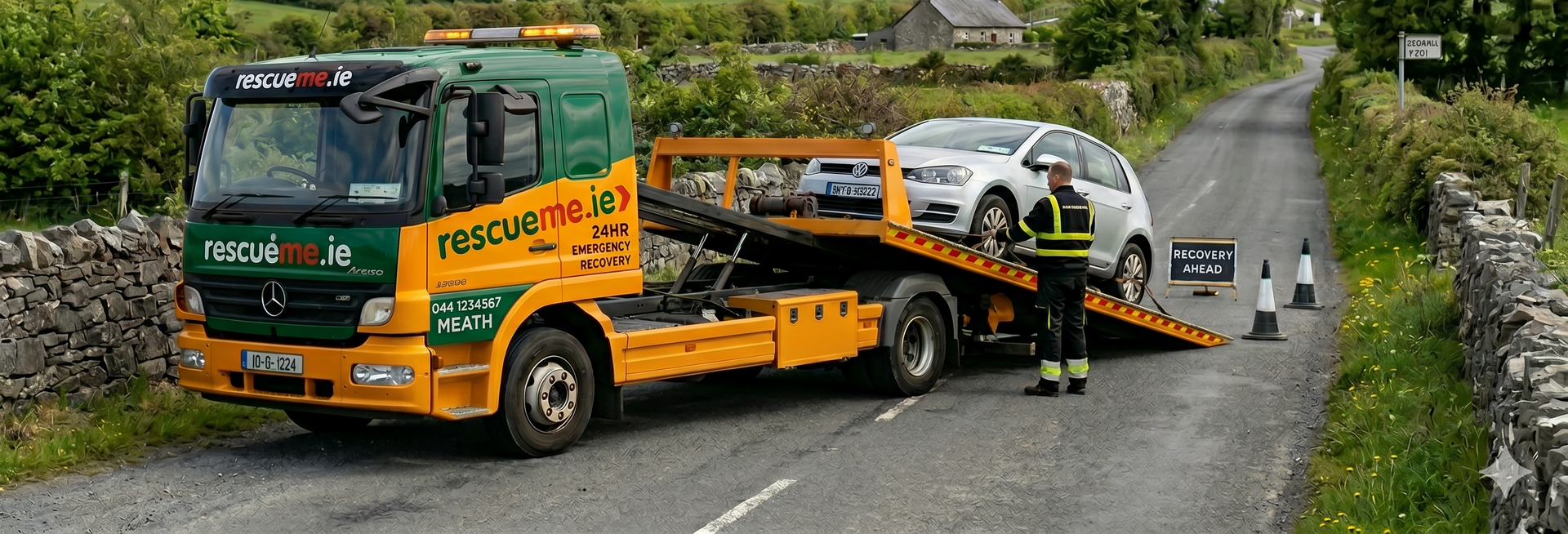
Tow truck R402 Meath for breakdown recovery, roadside assistance and jump start near Navan, Trim, Kells and Ashbourne. Fast 24/7 emergency help near you now today.
Tow truck R401 Meath for breakdown recovery, roadside assistance and jump start near Donore, Julianstown, Laytown and Bettystown. Fast 24/7 emergency help near you
Tow truck R164 Meath for breakdown recovery, roadside assistance and jump start near Navan, Slane, Duleek, Bettystown. Fast 24/7 emergency help near you now today.
Tow truck R163 Meath for breakdown recovery, roadside assistance and jump start near Navan, Kilberry, Gibbstown, Painestown and Slane. Fast 24/7 emergency help
Tow truck R162 Meath for breakdown recovery, roadside assistance and jump start near Navan, Kilberry and Nobber. Fast 24/7 emergency help near you now today.
Tow truck R161 Meath for breakdown recovery, roadside assistance and jump start near Trim, Kilmessan, Bective and Navan. Fast 24/7 emergency help near you now today.
Tow truck R160 Meath for breakdown recovery, roadside assistance and jump start near Trim, Longwood and Enfield. Fast 24/7 emergency help near you now today.
Tow truck R157 Meath for breakdown recovery, roadside assistance and jump start near Dunboyne, Clonee, Rathbeggan and Moyglare. Fast 24/7 emergency help near you now
Tow truck R156 Meath for breakdown recovery, roadside assistance and jump start near Summerhill, Batterstown, Dunboyne, Moynalvy and Culmullin. Fast 24/7 help
Tow truck R155 Meath for breakdown recovery, roadside assistance and jump start near Ratoath, Dunshaughlin and Culmullin. Fast 24/7 emergency help near you now today
Tow truck R402 Meath for breakdown recovery, roadside assistance and jump start near Navan, Trim, Kells and Ashbourne. Fast 24/7 emergency help near you now today.
Tow truck R401 Meath for breakdown recovery, roadside assistance and jump start near Donore, Julianstown, Laytown and Bettystown. Fast 24/7 emergency help near you
Tow truck R164 Meath for breakdown recovery, roadside assistance and jump start near Navan, Slane, Duleek, Bettystown. Fast 24/7 emergency help near you now today.
Tow truck R163 Meath for breakdown recovery, roadside assistance and jump start near Navan, Kilberry, Gibbstown, Painestown and Slane. Fast 24/7 emergency help
Tow truck R162 Meath for breakdown recovery, roadside assistance and jump start near Navan, Kilberry and Nobber. Fast 24/7 emergency help near you now today.
Tow truck R161 Meath for breakdown recovery, roadside assistance and jump start near Trim, Kilmessan, Bective and Navan. Fast 24/7 emergency help near you now today.
Tow truck R160 Meath for breakdown recovery, roadside assistance and jump start near Trim, Longwood and Enfield. Fast 24/7 emergency help near you now today.
Tow truck R157 Meath for breakdown recovery, roadside assistance and jump start near Dunboyne, Clonee, Rathbeggan and Moyglare. Fast 24/7 emergency help near you now
Tow truck R156 Meath for breakdown recovery, roadside assistance and jump start near Summerhill, Batterstown, Dunboyne, Moynalvy and Culmullin. Fast 24/7 help
Tow truck R155 Meath for breakdown recovery, roadside assistance and jump start near Ratoath, Dunshaughlin and Culmullin. Fast 24/7 emergency help near you now today