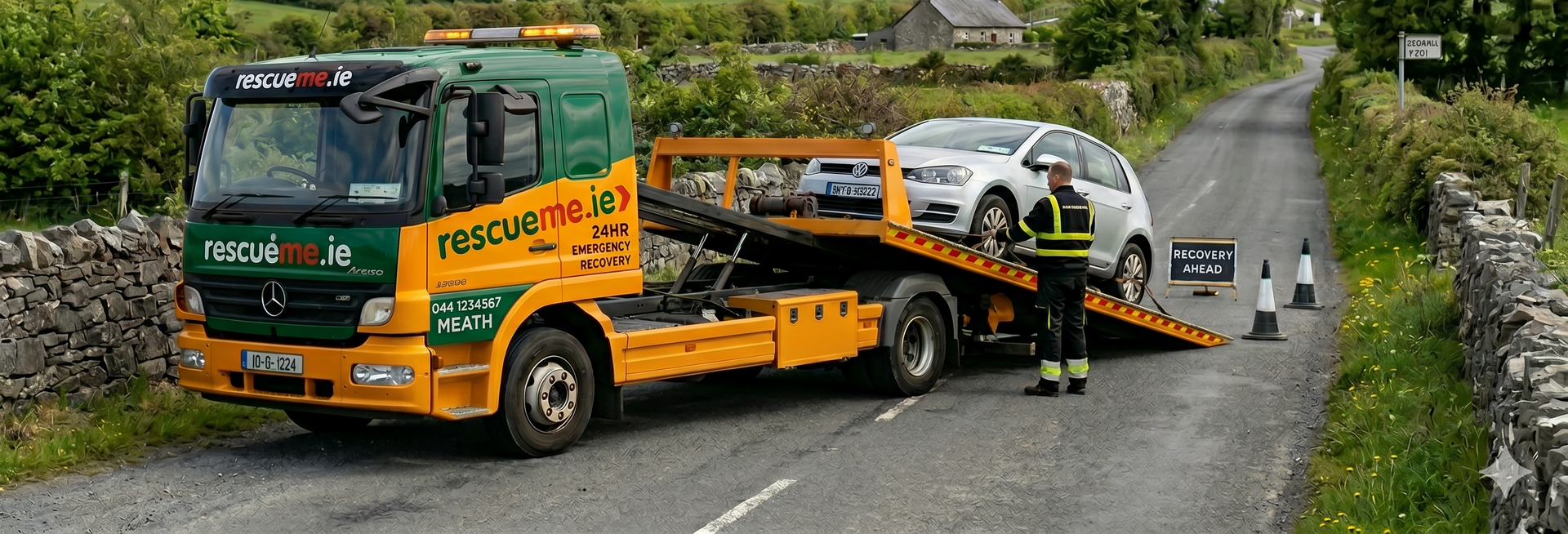
Car Won’t Start Help: What to Check First (and What to Do Next)
Few things are more frustrating than turning the key (or pressing start) and getting nothing back. The good news: most “car won’t start” situations come down to a small set of common causes. This guide helps you stay safe, narrow it down fast, and decide whether you need a jump start or a different type of help.
Quick takeaway: The sound matters. No crank / clicking usually points to battery or connections. Cranks strongly but won’t start is often fuel/ignition/sensors/immobiliser. Don’t keep cranking it — try one clean attempt, then switch to checks or get help.
Step 1: Make it safe (before troubleshooting)
If you’re stopped somewhere awkward — a narrow rural road, a busy street, a junction — treat it like a roadside incident. The roadside is often the dangerous part, not the fault.
- Hazards on immediately.
- If you can roll safely, move to a car park / lay-by / wider verge.
- Handbrake on, car in gear (manual) / Park (auto).
- Avoid standing near live traffic — if it’s unsafe, skip DIY and arrange help.
Step 2: What happens when you try to start it?
This is the fastest way to narrow it down. Choose the one that matches your situation:
A) Nothing happens (no crank, no click)
Often battery/connection related, but sometimes a key/immobiliser or start/neutral safety issue.
B) Clicking (single click or rapid clicking)
Classic weak battery symptom — or poor contact at the battery terminals.
C) It cranks strongly but won’t start
Less likely to be battery. Think fuel delivery, ignition, sensors, or immobiliser/security.
D) It starts then dies
Could be low fuel, air/fuel issues, or an immobiliser/sensor fault. If it repeats, stop trying and get help.
Step 3: Quick checks you can do in 60 seconds
These checks fix a surprising number of non-starts and don’t require tools.
- Full reset: turn everything off, wait 30 seconds, then try one clean start.
- Auto? Make sure it’s fully in P(or try N).
- Manual? Clutch fully down (some cars won’t start unless it’s pressed properly).
- Key/fob warning? If you see “key not detected”, try the spare key if you have it.
- Fuel check: sounds obvious, but low fuel can cause crank/no start — especially on a slope.
- Look for drains: interior light, boot not closed, chargers left plugged in.
If it’s likely battery-related: what to do next
Clicking, slow cranking, and dim lights usually point to a battery or connection issue. If you’re in a safe place, these are the next sensible steps:
1) Quick visual check (no tinkering)
Look for obviously loose battery clamps or heavy corrosion (white/green build-up). If you’re not confident, don’t handle it roadside.
2) Jump start / boost pack
A proper jump start often gets you moving quickly. If the car starts, you’ll still need drive time to rebuild charge.
3) If it starts, don’t switch it off immediately
Drive for 20–30 minutes if possible (steady driving beats idling). If it dies again soon, the battery may be failing or it may not be charging.
Don’t keep cranking it: repeated start attempts drain the battery and can turn a quick boost into a bigger problem.
If it cranks but won’t start: the common causes
When the engine turns over normally but won’t fire, a jump start usually won’t solve it. Common culprits include:
- Fuel issues: low fuel, fuel delivery fault, or (rarely) bad fuel
- Ignition issues: coils/plugs (often after misfiring)
- Sensors: a fault can prevent starting even if it cranks
- Immobiliser/security: key not recognised, steering lock issues, warning messages
A quick “car won’t start” checklist (save this)
- Make it safe: hazards on, avoid traffic exposure.
- Listen: nothing / clicking / slow crank / strong crank?
- Try one clean start, then stop repeating attempts.
- Quick checks: gear position, clutch, key detection, fuel.
- Battery clues: dim lights + clicking = likely boost/jump start help.
- Get help if unsure or if it cranks but won’t start.
Final word
Most non-starts are either a battery issue or a simple condition check (key/gear/clutch). If you’re stuck, don’t waste time with repeated cranking — stay safe, share your location clearly, and get the right help quickly.