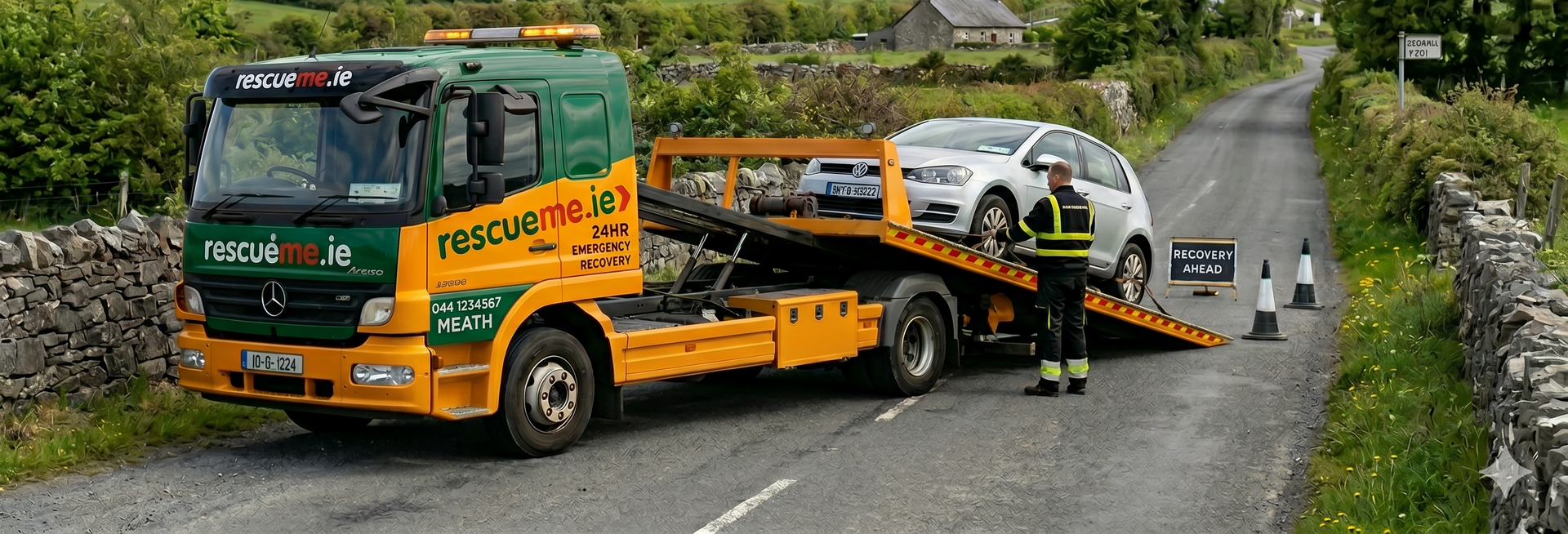
Car Breaks Down Somewhere You Don’t Know: What to Do (Step by Step)
Breaking down is stressful. Breaking down in an unfamiliar place is worse — you don’t know the roads, you don’t know where “safe” is, and your brain starts racing. The goal is simple: get safe, get seen, and get the right help without making things riskier. Here’s a practical checklist you can follow anywhere.
Quick takeaway: Don’t try to “solve everything” immediately. First: hazards on and get to a safe spot. Second: share your exact location. Third: arrange help. Most breakdowns are manageable — the dangerous part is the roadside.
Step 1: Make it safe (before you do anything else)
In an unfamiliar area, it’s easy to stop in the first available space — but not every “space” is safe. Your priority is to avoid being hit.
- Hazards on immediately.
- Slow down gently and steer to a safer spot: car park, lay-by, wide verge, petrol station entrance, or a quiet side road.
- If you’re on a bend/narrow road/poor visibility area and the car can still roll safely, keep moving to a better stopping point.
- Handbrake on, car in gear (manual) / Park (auto).
- Keep passengers safe and away from traffic.
Rule of thumb: If you’d have to stand near live traffic to “fix” the problem, it’s not the right place to troubleshoot. Get help instead.
Step 2: Get your exact location (this is what speeds everything up)
When you don’t know the area, “I’m near a big tree” won’t help anyone find you. Your goal is to give a location that’s unmissable.
Best option: drop a pin
Open your maps app, drop a pin, and share/copy the location link. It’s the fastest way for help to find you.
Use an Eircode or business name
If you’re near houses or a business, an Eircode (or the exact venue name) makes your location far less vague.
Road details (very useful)
Note the road type and direction: M/N/R road, nearest junction, and which way you were travelling.
Step 3: Decide if it’s safer to stay in the car or step out
There’s no one rule for every road. The principle is: avoid exposure to live traffic.
Safe car park / quiet area
Stay with the car, keep your phone charged, and wait for help. Hi-vis and a torch help at night.
Roadside with traffic close by
Don’t stand beside the car near the traffic lane. If you must exit, do it carefully and move to a safer position away from the road.
If you feel unsafe for any reason
Trust that instinct. Lock up if appropriate, keep your phone ready, and arrange help quickly. If it’s urgent or dangerous, contact emergency services.
Step 4: Quick clues to describe the problem
You don’t need to diagnose it like a mechanic — but a few clues help you request the right assistance.
Car won’t start
Clicking/slow crank often suggests battery help (jump start). Strong cranking but no start can be something else.
Flat tyre / puncture
If you’re not in a safe place to change it, don’t. A call-out is often the safest option.
Overheating / steam
Stop safely and let it cool. Don’t open a hot coolant cap. Continuing can cause serious engine damage.
Step 5: What to say when you request help (copy/paste checklist)
- Exact location: pin drop / Eircode / road + direction
- Vehicle: make/model + petrol/diesel/hybrid
- Problem: won’t start / flat tyre / overheating / warning lights
- What you’re seeing/hearing: clicking, smoke, leak, grinding, messages
- Your situation: safe car park vs roadside vs hard shoulder
- Any access notes: barrier, underground car park, tight entrance
What not to do when you’re stranded in an unfamiliar place
“I’ll just keep driving until it gets worse.”
Overheating, loud noises, serious warnings, or harsh vibration can turn a small issue into major damage.
“I’ll start fixing it on the roadside.”
If you’re near live traffic, it’s not worth the risk. The breakdown is stressful — don’t add danger on top.
“I don’t want to bother anyone.”
Getting help early is often the safest option. Waiting until it’s worse rarely improves the situation.
A quick breakdown checklist (save this)
- Hazards on and slow down gently.
- Stop somewhere safer if the car can still roll.
- Handbrake on and keep passengers safe.
- Drop a pin/ get an Eircode / note road + direction.
- Explain symptoms(no start, puncture, overheating, warning lights).
- Arrange help and avoid risky roadside DIY.
Final word
Breaking down somewhere unfamiliar feels overwhelming — but the steps are always the same: get safe, get located, and get help. You don’t need to be a mechanic — you just need to make good decisions in the first five minutes.